
As farms grow, feed handling often becomes just as important as feed itself.
One of the most common conversations we have at Stone House Grain isn’t about formulations or ingredients—it’s about logistics. Specifically, how feed arrives on the farm and how it moves once it’s there.
For many farms, the choice eventually comes down to bulk feed or tote delivery.
Neither option is inherently better. The right answer depends on your scale, infrastructure, labor, feeding system, and how feed moves through your operation every day.
Start With How You Feed
Before thinking about bins, trucks, or delivery costs, it’s worth asking a simple question:
How does feed actually move around your farm?
Some operations feed from a central location every day. Others have pasture-based systems where feed needs to travel to multiple paddocks, coops, or grazing areas. Some farms have tractors and forklifts available all day long. Others rely on smaller equipment and hand labor.
The best delivery system is usually the one that fits naturally into the way your farm already works.
What Is a Tote?
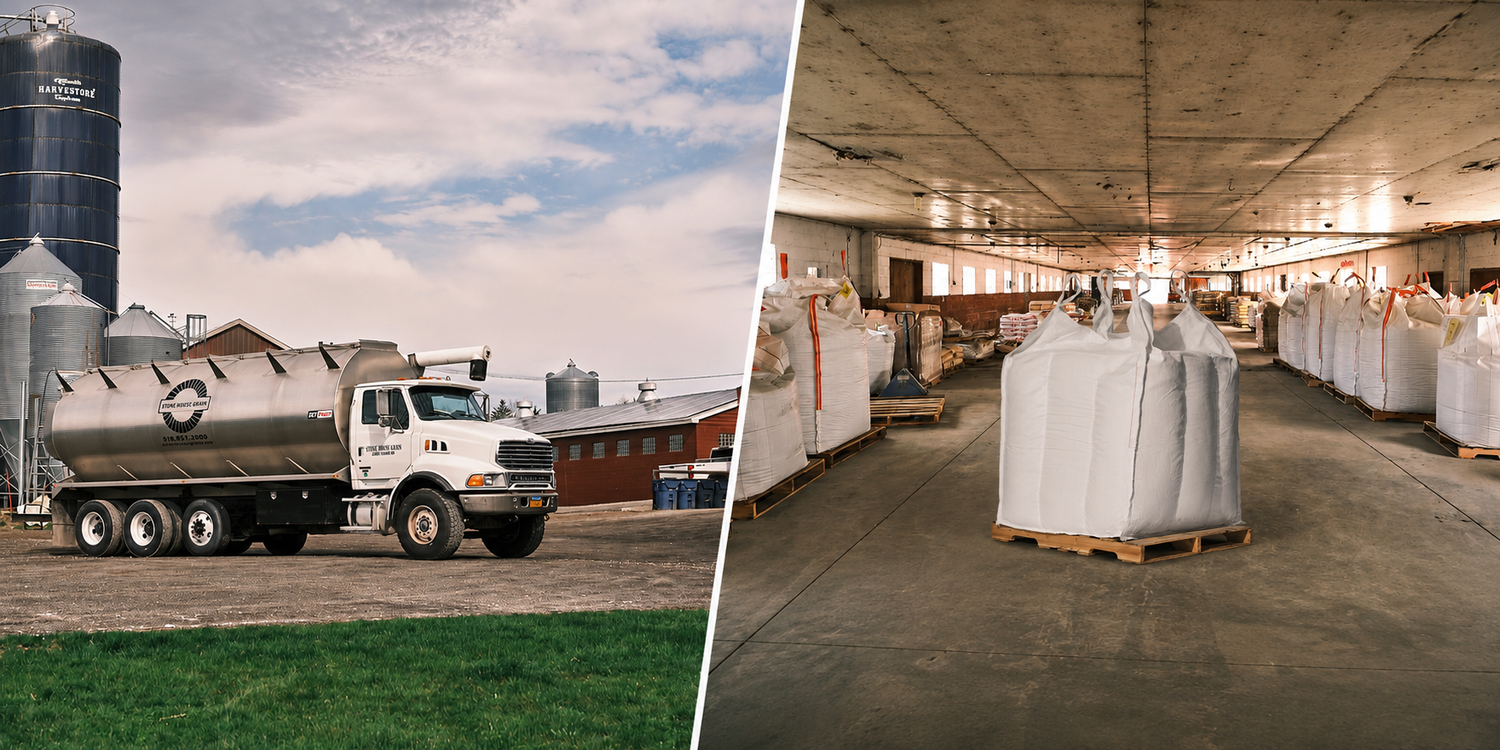
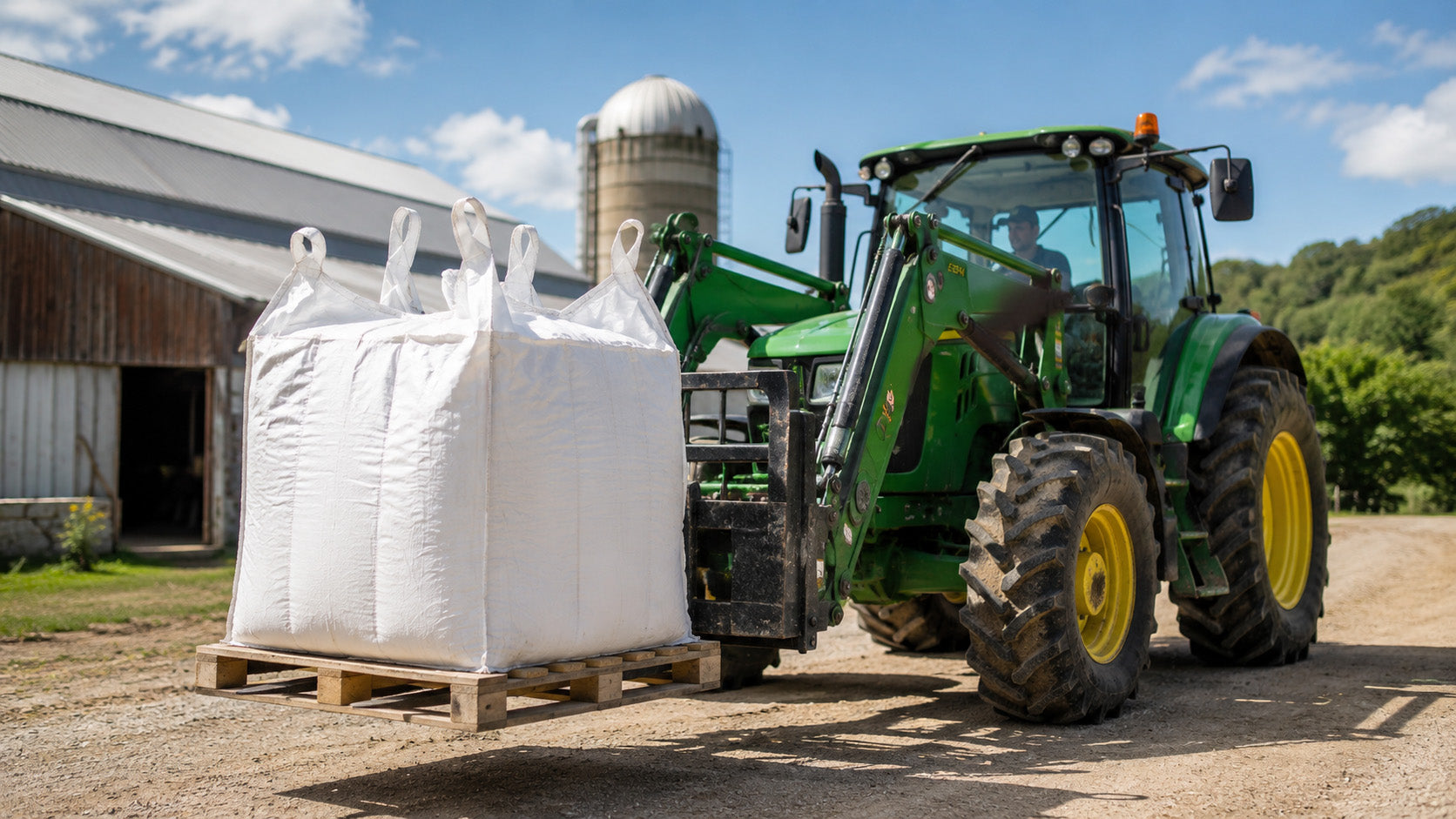
At Stone House Grain, a tote is a one-ton supersack containing approximately 2,000 pounds of feed delivered on a pallet.
Totes require equipment with forks for unloading and handling—typically a tractor, skid steer, telehandler, or forklift. Many farms leave the tote on the pallet and move it where needed, while others empty feed into gravity wagons, bulk bins, feed carts, or existing feeding systems.

How Tote Feed Is Delivered
Most tote orders are delivered via LTL (Less-Than-Truckload) freight carriers rather than dedicated feed trucks.
This allows farms to purchase feed in larger quantities without installing a bulk bin or silo. For many operations, totes serve as a practical middle ground between bagged feed and bulk delivery, offering greater feed volume while maintaining flexibility in storage and handling.
Stone House Grain coordinates tote deliveries throughout the Northeast using trusted freight partners. Delivery timing, unloading requirements, and site access considerations can vary depending on location and order size.
For more information about shipping and delivery options, visit our Shipping Information page.
What Is Bulk Feed?
Bulk feed is delivered directly into a feed bin or silo.
Once a farm installs bins, the system is simple and efficient. Our delivery truck unloads feed into the bin, and the farm unloads feed directly from the bin.
Bulk systems eliminate much of the packaging, handling, and labor associated with bags or totes. They also allow farms to store larger quantities of feed on-site.

For farms moving significant volumes of feed every week, bulk delivery can create meaningful operational efficiencies.
At Stone House Grain, some of our strongest candidates for bulk delivery are currently purchasing four to eight tons of feed per week in totes. At that volume, transportation and handling costs can become substantial enough that bulk delivery starts to make economic sense.
Where Totes Often Shine
Totes tend to work particularly well for farms that:
- Need to move feed around the farm.
- Feed multiple species or different rations.
- Have pasture-based livestock systems.
- Are growing quickly and still refining infrastructure.
- Want bulk-like purchasing without installing permanent storage.
We’ve seen many poultry, hog, and mixed livestock farms operate very successfully on totes for years.
The key advantage is flexibility.
A tote can be picked up, moved, emptied, and replaced wherever feed is needed.
A bulk bin stays exactly where you put it.
Where Bulk Often Makes Sense
Bulk delivery becomes attractive when:
- Feed usage is consistent.
- Feed consumption is high.
- Labor efficiency becomes important.
- Permanent feeding infrastructure already exists.
- Feed handling is becoming a daily operational burden.
Many farms eventually reach a point where managing pallets, tote movement, and feed transfers consumes enough time that installing a bulk system becomes the obvious next step.
The larger and more centralized the feeding operation, the stronger the case for bulk typically becomes.
Thinking About Feed Bins
If you’re considering bulk delivery, feed storage becomes the first major decision.
Most farms install dedicated feed bins or silos sized around expected consumption and delivery frequency.
When evaluating bins, think about:
- Feed usage per week.
- Available truck access.
- Future growth plans.
- Auger requirements.
- Weather exposure.
- Foundation and site preparation.
Some commonly used agricultural feed bin manufacturers include:
The right solution depends heavily on the farm’s layout and feeding system.
Don’t Forget Portable Feed Wagons
Not every farm that buys bulk feed wants to install a permanent feed bin.
Many operations—particularly pasture-based poultry, pigs, and rotational grazing systems—use portable gravity wagons or feed bins on wheels. These provide many of the labor-saving advantages of bulk feed while allowing the feed itself to move around the farm as livestock are rotated between paddocks or production areas.
Portable feed wagons can be filled directly from a bulk delivery, or many farms use them as an intermediate storage system by emptying one-ton totes into the wagon. Either approach reduces the amount of manual handling while keeping feed protected from weather and pests.
For farms that value flexibility, portable feed wagons often provide an excellent middle ground between totes and permanent silos.

If you’re exploring portable feed storage, companies such as Tobb Products manufacture gravity wagons and mobile feed bins designed specifically for livestock operations.
Before investing, think about:
- How far feed needs to travel around your farm.
- Whether livestock stay in one location or rotate frequently.
- How often you’ll be refilling the wagon.
- The tractor or equipment available for moving it.
- Whether your operation may eventually transition to a permanent bulk bin.
As with most things on the farm, there’s rarely one perfect solution. The best feed handling system is the one that fits the way your farm actually operates.
The Progression We Often See
While every farm is different, a common pattern looks something like this:
Bags → Totes → Bulk
Many farms begin with bagged feed because it’s accessible and requires very little infrastructure.
As feed volume grows, totes become attractive because they reduce handling and packaging while maintaining flexibility.
Eventually, some operations grow large enough that dedicated bulk storage becomes the logical next step.
Not every farm follows that path. Some remain on totes indefinitely because it fits their management style better.
Which Option Is Right For You?
If you’re feeding livestock from multiple locations, experimenting with infrastructure, or managing several feed types, totes may be the best fit.
If you’re moving large volumes of feed through a centralized system and looking to reduce labor and handling, bulk may deserve serious consideration.
The answer isn’t about choosing the biggest system.
It’s about choosing the system that makes feeding animals easier every day.
If you’re thinking about transitioning from bags to totes, exploring bulk delivery, or simply trying to improve feed handling on your farm, we’d be happy to talk through your operation and share what we’ve seen work for other farms across the Northeast. Give Andrew a shout and he'll talk shop with you!
Continue Exploring
- Learn about our Bulk Feed Delivery Program
- Explore our Custom Feed Programs
- Visit our For Working Farms Resource Center

Leave a comment
This site is protected by hCaptcha and the hCaptcha Privacy Policy and Terms of Service apply.