

As livestock operations grow, feed handling quickly becomes just as important as feed itself.
It’s one thing to have high-quality feed delivered to your farm. It’s another to move two thousand pounds of it efficiently, safely, and conveniently every day.
That’s where tote feed has found its place.
For many farms across the Northeast, one-ton supersacks offer an ideal middle ground between bagged feed and bulk delivery. They reduce packaging, simplify ordering, and allow farms to purchase larger quantities of feed without investing in permanent bulk infrastructure.
But getting the tote delivered is only the beginning.
The real question is:
How do you actually work with a one-ton tote once it arrives?
Over the years we’ve had hundreds of conversations with farmers about exactly that. While every operation is different, there are some common practices that consistently make life easier.
From the Farm
One of the biggest advantages of tote feed isn’t simply buying more feed at once. It’s reducing the number of little jobs that happen every single day.
Why More Farms Are Choosing Tote Feed
For many growing farms, bags eventually become difficult to manage.
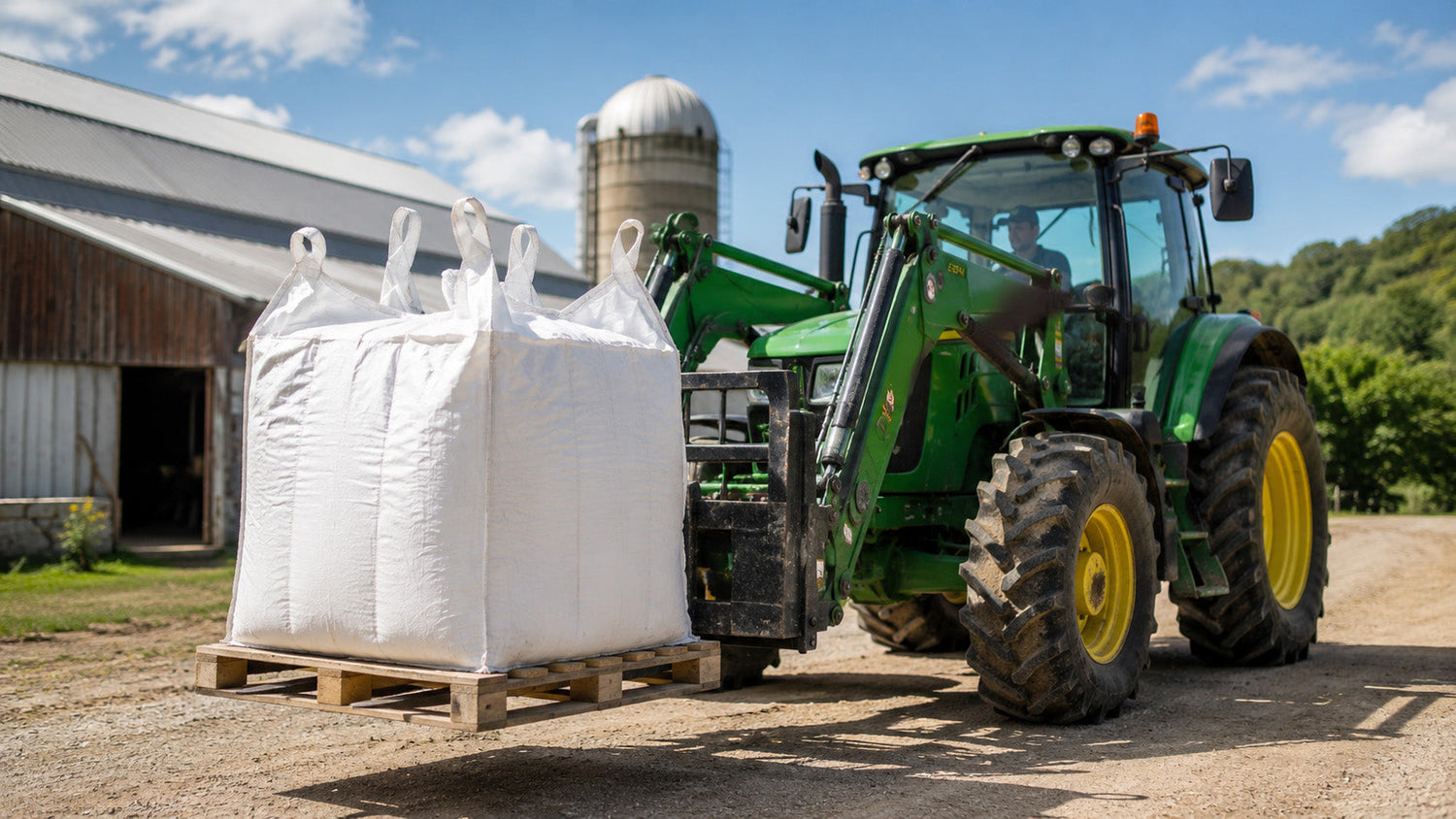
Instead of moving dozens of individual bags every week, a single tote delivers approximately 2,000 pounds of feed on one pallet.
That means:
- less packaging
- fewer pallets
- fewer deliveries
- less handling
- fewer trips moving feed around the farm
Unlike bulk delivery, however, totes don’t require permanent feed bins or silos. That flexibility makes them particularly attractive for farms that are still growing, experimenting with infrastructure, or feeding animals in multiple locations.
If you’re still deciding whether totes or bulk delivery makes more sense for your operation, we’ve written a complete guide comparing both systems.
→ Read: Bulk Feed vs. Totes — Which Feed Delivery System Is Right for Your Farm?

The Day Your Tote Arrives
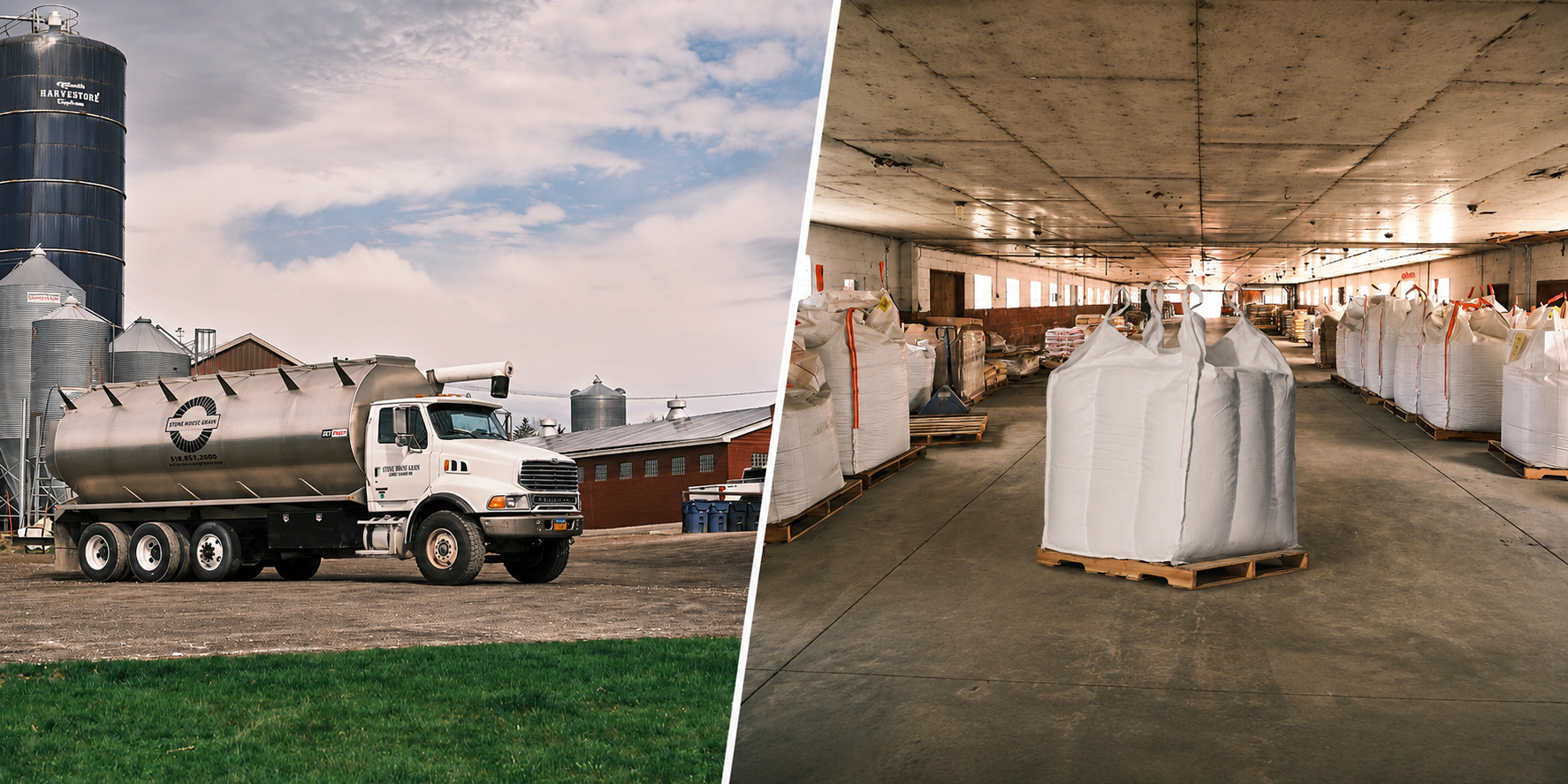
Stone House Grain tote orders are typically delivered by LTL (Less-Than-Truckload) freight carriers.
Unlike a bulk feed truck, which blows feed directly into a bin, the freight truck is delivering a palletized product that needs to be unloaded.
Before delivery day, it’s worth thinking through a few practical questions.
- Where will the truck unload?
- Can the truck easily access that location?
- Is your tractor or forklift available?
- Where will the tote live after unloading?
A few minutes of planning before delivery can save moving the tote multiple times later.
Stone House Tip
Decide exactly where the tote is going before the truck arrives. Moving a 2,000-pound tote twice is rarely anyone’s idea of a productive afternoon.
For more information about delivery requirements and shipping throughout the Northeast, visit our Shipping Information page.
Leave It on the Pallet
This surprises some first-time customers.
Most Stone House Grain customers simply leave the tote on the original pallet.
The pallet protects the bottom of the bag from moisture while also making it easy to move with tractor forks whenever needed.
There’s usually no advantage to removing the pallet.
Instead, many farms place the tote near the area where they’ll actually be feeding animals and simply work from that location until it’s empty.
Simple often wins.

How Most Farms Actually Feed from a Tote
People often imagine elaborate dispensing systems.
The reality is usually much simpler.
Many farms:
- position the tote beside the feeding area
- fill buckets or scoops directly from the bag
- carry feed to feeders
It’s straightforward, inexpensive, and easy to adapt as the farm changes.
For pasture poultry, rotational grazing systems, or smaller livestock groups, this flexibility is often more valuable than a permanent feeding system.
From the Farm
Most tote customers aren’t trying to automate everything. They’re trying to make feeding simpler without losing flexibility.
Moving Feed Around the Farm
Where totes really shine is portability.
Because the entire pallet can be picked up with forks, feed can move as your operation moves.
Depending on your equipment, that might mean using:
- a tractor
- a skid steer
- a telehandler
- a forklift
Rather than bringing animals to the feed, you’re bringing feed closer to the animals.
For pasture-based operations especially, that flexibility becomes a real advantage.
Safe Handling Matters
A full tote weighs approximately 2,000 pounds before you account for the pallet.
That’s a significant load.
Always make sure your lifting equipment is rated for the weight you’re moving, lift the tote evenly using both forks, and avoid transporting a suspended tote over uneven ground or where people are working.
Just like moving round bales or pallets of seed, a little extra care goes a long way.
Portable Feed Doesn’t Have to Stay in the Tote
While many farms feed directly from the tote, others transfer feed into equipment that’s easier to move throughout the day.
Gravity Wagons and Mobile Feed Bins
Many livestock farms use gravity wagons or portable feed bins as a practical middle ground between tote feed and permanent bulk storage.
These systems effectively become feed bins on wheels.
Rather than repeatedly moving a one-ton tote, a farm can transfer feed once into a gravity wagon and then tow that wagon wherever feed is needed. For pasture poultry, rotational grazing systems, and mixed livestock operations, this approach can significantly reduce daily handling.
One manufacturer that specializes in this type of equipment is TOBB Products, whose portable axle bins and gravity-feed systems are designed specifically for livestock operations.

Learn more about TOBB portable feed bins.
The exact manufacturer matters less than the principle. The goal is to reduce unnecessary handling while keeping feed close to the animals.
Stone House Tip
Think less about how the feed arrives, and more about how it moves during the other 364 days of the year.
Portable Feed Bins: Bulk Flexibility Without Permanent Infrastructure
Not every farm is ready for a permanent feed bin.
That’s where portable gravity wagons have become increasingly popular.
Think of them as temporary bulk storage.
A tote can be emptied into the wagon once, then the wagon becomes the feed source for days or weeks.
When feeding locations change, the wagon simply moves with the tractor.
For many pasture-based livestock operations, that’s a practical compromise between tote feed and permanent bulk bins.
Protecting Your Feed
Totes are remarkably durable.
The woven supersack material stands up well to normal farm use, and the pallet keeps the feed elevated above damp ground.
That said, feed is still feed.
Once the protective shrink wrap has been removed, it’s worth treating the tote with the same care you’d give any stored grain.
Ideally:
- store totes under cover
- keep them dry
- protect them from prolonged rain
- avoid standing water beneath pallets
- use them within a reasonable timeframe after opening
Many farms store totes inside machine sheds, commodity buildings, or covered barns until they’re needed.
Once you’ve removed the shrink wrap, try to work through the tote steadily rather than leaving an opened bag sitting for long periods. Fresh feed, kept dry and protected, is always the goal.

Keeping Wildlife Out
One thing every livestock producer understands is that feed attracts animals.
While woven tote bags are surprisingly tough, rodents and wildlife can eventually damage almost any feed container if given enough opportunity.
Rats, mice, birds, and raccoons all appreciate free feed just as much as your livestock.
Every farm should have a rodent management strategy regardless of whether feed is stored in bags, totes, or bulk bins.
Keeping storage areas clean, limiting spilled feed, and monitoring wildlife activity will usually prevent bigger problems later.
From the Farm
A tote may be tough, but it isn’t wildlife-proof. Good feed storage starts with good farm management.
Think About Feed Flow, Not Just Feed Storage
One of the biggest improvements many farms make isn’t changing feed.
It’s changing where the feed sits.
Before placing a tote, ask yourself:
- Where do animals get fed?
- Which direction do I usually drive the tractor?
- Am I crossing the yard multiple times?
- Could this tote sit closer to the work?
Those small decisions happen every day.
Over a season, they add up to hours of saved labor.
Good farms aren’t just efficient because they work hard.
They’re efficient because they’ve thought through the flow of everyday jobs.
Sometimes the biggest efficiency gains don’t come from buying new equipment. They come from moving a tote twenty feet closer to where chores already happen. Before investing in more infrastructure, spend a week paying attention to your own footsteps. The answer is often right there.

When It’s Time to Think About Bulk
Totes work incredibly well for many farms.
Some never outgrow them.
Others eventually reach a point where they’re moving so much feed that permanent bulk storage becomes the next logical step.
A few signs that it might be time include:
- you’re feeding from a single central location
- you’re consistently ordering several tons every week
- moving totes has become another daily chore
- labor efficiency is becoming increasingly important
At that stage, installing a feed bin and switching to bulk delivery may reduce handling even further.
If you’re beginning to ask those questions, take a look at our guide comparing Bulk Feed vs. Totes or learn more about our Bulk Feed Delivery Program.
Every Farm Finds Its Own System
One thing we’ve learned over the years is that no two farms handle feed exactly the same way.
Some feed directly from totes.
Some transfer feed into wagons.
Some use feed carts.
Others eventually move into permanent bulk systems.
None of those approaches is inherently right or wrong.
The best system is the one that fits the rhythm of your farm, your equipment, your labor, and the way you care for your animals every day.
If you’re wondering whether totes make sense for your operation—or how other farms are handling feed—we’re always happy to talk.
Andrew spends a lot of time visiting farms throughout the Northeast and has seen just about every approach to feed handling imaginable.
If you’re trying to figure out whether totes make sense, wondering when it’s time to move to bulk, or simply looking for ways to make feeding a little more efficient, he’d be happy to talk it through.
Further Reading
If you’re interested in learning more about feed storage, livestock nutrition, and farm management, these organizations publish excellent practical resources:
-
Cornell Cooperative Extension — Livestock and farm management resources
- Penn State Extension — Feed management, livestock housing, and agricultural best practices
-
University of Minnesota Extension — Livestock systems and feed management


Leave a comment
This site is protected by hCaptcha and the hCaptcha Privacy Policy and Terms of Service apply.